

Friday, May 24, 2013
Space Is The Place [Sun Ra Film 1974]


Thursday, May 23, 2013
UK Soldier Beheaded on London Street


Black Panther Party and other Black Revolutionary Video and Audio Recordings

Black Panthers and other Histories Video and Audio Recordings
381.44 mb (AVI) Total Runtime: 46mins Language: English Directed by Agnes Varda (1968)
This riveting documentary, “Black Panthers - Huey!”, directed by French filmmaker Agnes Varda transports you to the pivotal Free Huey rally held on February 17th, 1968 (Newton’s birthday), at Oakland Auditorium in Alameda, California. Newton, the charismatic young college student who, along with Bobby Seale, created the Black Panther Party, had been jailed for allegedly killing a police officer. His arrest–widely believed at the time to be a setup–galvanized Party support throughout the nation and led to a boom in Party membership, bringing a new level of public attention to the Panthers’ cause. Over 5,000 people attended the rally, which featured Party leaders and guest speakers including Eldridge Cleaver, Bobby Seale, James Forman, Bob Avakian, Stokely Carmichael, H. Rap Brown and Ron Dellums. Through stark un-editorialized footage, this documentary chronicles the speakers outlining the Party’s platform goals, their strategies for freeing Newton from jail and more. B&W, 31 minutes.
Plus: BLACK PANTHER NEWSREEL (USA, 1968):
The California Newsreel was an underground alternative to the commercial broadcast media of the 1960’s. This unique clip provides a chilling look at the California racial environment of 1968, including demonstration scenes outside the Alameda County Jail. A rare in-jail interview with Huey P. Newton, is featured, with Eldridge Cleaver and Bobby Seale also offering perspectives on the Panthers and what they perceive as police brutality on the black community. Essential viewing for anyone interested in American or Afro-American history, these two pieces provide an entertaining and educational look at a turbulent, incendiary time. France, 1968, B&W, 15 minutes.
The California Newsreel was an underground alternative to the commercial broadcast media of the 1960’s. This unique clip provides a chilling look at the California racial environment of 1968, including demonstration scenes outside the Alameda County Jail. A rare in-jail interview with Huey P. Newton, is featured, with Eldridge Cleaver and Bobby Seale also offering perspectives on the Panthers and what they perceive as police brutality on the black community. Essential viewing for anyone interested in American or Afro-American history, these two pieces provide an entertaining and educational look at a turbulent, incendiary time. France, 1968, B&W, 15 minutes.
REAL MEDIA (.rm file) John Lewis describes his experience on the Freedom Rides
REAL MEDIA (.rm file) Julian Bond talks about the formation of SNCC
REAL MEDIA (.rm file) Bob Moses describes the Greenwood Voter Registration Project
REAL MEDIA (.rm file) Fannie Lou Hamer talks about registering to vote
REAL MEDIA (.rm file) Fannie Lou Hamer sings
REAL MEDIA (.rm file) John Winters talks about sit-ins
REAL MEDIA (.rm file) The SNCC (Student Nonviolent Coordinating Committee) Freedom Singers: Hold On
REAL MEDIA (.rm file) The SNCC Freedom Singers: We Shall Overcome
REAL MEDIA (.rm file) Julian Bond talks about the formation of SNCC
REAL MEDIA (.rm file) Bob Moses describes the Greenwood Voter Registration Project
REAL MEDIA (.rm file) Fannie Lou Hamer talks about registering to vote
REAL MEDIA (.rm file) Fannie Lou Hamer sings
REAL MEDIA (.rm file) John Winters talks about sit-ins
REAL MEDIA (.rm file) The SNCC (Student Nonviolent Coordinating Committee) Freedom Singers: Hold On
REAL MEDIA (.rm file) The SNCC Freedom Singers: We Shall Overcome
Black Panthers at the California Capitol May 2, 1967 RealVideo (.rm file)
Free Huey Newton RealVideo (.rm file)
The Murder of Bobby Hutton RealVideo (.rm file)
Bobby on the Early Days of the Panthers RealVideo (.rm file)
Bobby on the Early Days of the Panthers RealVideo (.rm file)
Black Panthers and the Free Breakfast for Children Program RealVideo (.rm file)
Bobby on the Growth of the Black Panthers RealVideo (.rm file)
Video clip of Huey Newton interview in the Alameda County jail (also includes clip of Eldridge Cleaver) RealVideo (.rm file)
Video clip of Free Huey rally, Alameda County jail [From the video Black Panther. RealVideo (.rm file)
Video clip of Free Huey rally, Alameda County jail [From the video Black Panther. RealVideo (.rm file)
January 26, 1968 -- Rally for the Oakland 7. Includes speeches by Bobby Seale, Bettina Apthecker (Free Speech Movement), Robert Scheer (Managing Editor, Ramparts Magazine), Bob Avakian (Peace & Freedom Party), and John Kelly (Professor of Mathematics, UC Berkeley). The Oakland 7 were anti-war protestors (members of the Campus [UC Berkeley] Stop the Draft Week Committee) arrested on October 17, 1967 at the Oakland, California induction center during "Stop the Draft Week" protest activities. The defendants were charged on January 28, 1969 by the Oakland Grand Jury with conspiracy to commit misdemeanors. KPFA Radio, February 20, 1968 (Pacifica Radio Archives BB1783) 50 min. © Pacifica Radio, 1968. All rights reserved. (.rm file)
February 15, 1968 -- Panel discussion of the alliance between the Black Panther Party and the Peace & Freedom Party. Participants include Bobby Seale (P Chairman), and Bob Avakian and Mike Parker, two organizers of the PFP. KPFA Radio, February 15, 1968 (Pacifica Radio Archives BB1632) 61 min. © Pacifica Radio, 1968. All rights reserved. (.rm file)
Angela Davis - The Prison Industrial Complex (17 parts all MP3 files)
01 - On Becoming An Activist.mp3
02 - Race, Class & Incarceration.mp3
03 - Young Black Men & Prison.mp3
04 - Technologies Of Punishment.mp3
05 - The Specter Of Crime.mp3
06 - Political Persecution.mp3
07 - Enemies Are Needed.mp3
08 - Targeting Women.mp3
09 - Anti-Immigrant Rhetoric.mp3
10 - Nike.mp3
11 - The War On Drugs.mp3
12 - Corporations & Patterns Of Immigration.mp3
13 - The Prison Industrial Complex.mp3
14 - Making A Difference.mp3
15 - Who Pays, Who Plays.mp3
16 - What Is To Be Done.mp3
17 - Breaking The Silence.mp3
01 - On Becoming An Activist.mp3
02 - Race, Class & Incarceration.mp3
03 - Young Black Men & Prison.mp3
04 - Technologies Of Punishment.mp3
05 - The Specter Of Crime.mp3
06 - Political Persecution.mp3
07 - Enemies Are Needed.mp3
08 - Targeting Women.mp3
09 - Anti-Immigrant Rhetoric.mp3
10 - Nike.mp3
11 - The War On Drugs.mp3
12 - Corporations & Patterns Of Immigration.mp3
13 - The Prison Industrial Complex.mp3
14 - Making A Difference.mp3
15 - Who Pays, Who Plays.mp3
16 - What Is To Be Done.mp3
17 - Breaking The Silence.mp3
Prisons On Fire
01 - Introduction.mp302 - Soledad Brothers.mp303 - Black Power And The Global Revolution.mp304 - Marin County Rebellion.mp305 - Slavery, Resistance & Revolution.mp306 - Criminal To Political, Lessons Inside.mp307 - Black Panthers, Cointelpro, & Repression Inside.mp308 - I Could Die Tomorrow.mp309 - August 21, 1971.mp310 - Response, Outrage!.mp311 - Remembering George.mp312 - George's Legacy.mp313 - Rebellion From California To New York.mp314 - Introduction.mp315 - Conditions Of Rebellion.mp316 - In Solidarity With George.mp317 - The Manifesto Is Declared.mp318 - Voices From The Occupied Yard.mp319 - Impending Massacre.mp320 - Massacre On The Yard, Vengeance & Torture.mp321 - Prisoner Indicted.mp322 - Seeking Real Justice, Going After The Government.mp323 - Wake Up!.mp3
Baba Jitu K. Weusi, founder of the National Black United Front, joins the Egungun (Ancestors)

Baba Jitu K. Weusi, founder of the National Black United Front
has crossed over to the realm of the Egungun (Ancestors) today.
We are thankful for the contributions he has made to the liberation
of Afrikan People. He will forever be missed and loved. May
Olodumare, the Orishas & Egungun be pleased with his work.
Also see the following:
http://www.blackstarnews.com/health/living/cancer-and-the-biggest-fight-of-my-life-jitu-weusi.html
Marvin X on Jitu
We are thankful to have spoken with Baba Jitu on our last visit to
New York City. He was in the hospital but trying to hold on as
cancer consumed his body but not his soul. May Allah be pleased
with this mighty warrior of Black National Liberation.
Wednesday, May 22, 2013
Notes from the Master Teacher of Black Studies: Dr. Nathan Hare

Dr. M, aka Marvin X, Dr. Julia Hare, Dr. Nathan Hare, Attorney Amira Jackmon
Dr. M.,
I was just reflecting again on when you saw my master’s thesis and two Ph.D. dissertations (all groundbreakers in their own way – one anticipating the field of sports sociology, another setting forth a new approach to the demographic analysis of social change, and the other constituting the first dissertation on black male/female relationships), you exclaimed that you’d “been looking for the black studies”). Which caused me to wonder if the archivist scouts from the great white centers of higher learning might not be aware of the fact that “black studies” is a misnomer. Not understanding this, the Africana Studies (“Africana,” as you know, is a Latin word constituting the feminine form of africanus”), terminologists seek to escalate it by changing the adjective “black” instead of the noun “studies” and skip over an inherent problem of semantics at the same time.
By “studies,” most people have empiricism in mind as the highest form of studying and the Middle French word recherché (“to go about seeking”), rather than searching within, as science was taking preeminence in the acquisition and definition of knowledge, and reflection and introspection were being preempted by the likes of Aristotle and the Grecian scientific method of dominance and nationalism embodied in the “Olympics” to justify the seafaring expansion and colonization of the darker peoples of the earth.
Meanwhile, black studies (alternately “Afroamerican studies,” circa 1968, was not so much geared to the acquisition of knowledge, except through the passé or primal “historical method,” as to the dissemination of knowledge selected ad hoc. Black studies was not so much motivated by the quest for knowledge as it was a new approach to pedagogy, to teaching and learning. Paulo Freire’s Pedagogy of the Oppressed (1968) assumed a high place in the minds of black studies advocates, as did its predecessors, Frantz Fanon (The Wretched of the Earth) and other revolutionists such as Mao Tse-Tung. Black studies was a new approach to scholarship and teaching, a scholarship yes but more so a pedagogy, a scholarship of change, indeed a scholarship for change. It constituted a war on “mystification” of knowledge and “miseducation “ of the oppressed. Its aim was to erase the separation of learning from life, of knowledge from community. It was a war on scholarship and pedagogy separated and divorced from the daily lives of the oppressed and the need for change; hence it was above all a search for “relevance” of knowledge to the black community and its needs.
Hence black studies never developed a research tradition. This fact was complicated further by the emergence of “Afrocentrism”(a semantic triumph of the concept of blackness (“the black perspective”), which claimed no methodology. After I pointed this out in the 1980s, its adherents did begin to talk briefly about “methodology,” but never came up with any they could call their own.
See previous publications of mine such as: “The Meaning of Black Studies,” Graduate Journal (circa 1970); ditto “Black Studies,” The Massachusetts Review; “Teaching Black Studies and Culture in Secondary Schools, “Social Education” (1969); the debate with Roy Wilkins of the NAACP in Newsweek, (2-10-1969) “A conceptual Proposal for a Department of Black Studies” (San Francisco State College, April, 1968). “A Black University Manifesto” (Howard University, February. 1967).
Archivists who come with a firm determination to get “everything” from a scholar, all of his/her “trash,” will risk letting the scholar’s gems slip through the scavenger’s net, inasmuch as the search for scholarly gems is much like the search for gold, a sifting, a search that relies on perception, luck and pluck. Trash is to be bagged while gems are to be plucked.
And, as you know, though I might deign to hold something back of presumed worthlessness, I would never lie to you. I look forward to the next visit from you and your crew. I received an order from Bro. Itibari for the book I had promised on the Black Think Tank web page, “Rebels without a name, whose publication has been stymied by traumatic and time-consuming events, though Maulana Karenga, who has seen most of the typed manuscripts of previously published essays collected for the book, has expressed an interest and commitment to getting the book published.
Nathan
Tuesday, May 21, 2013
Official Malcolm Shabazz Video Presentation at Funeral in Oakland
| ||||||
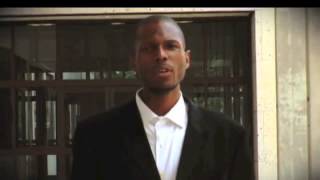
Marvin X reflects on the transition of Malcolm Shabazz to the Ancestors

Initially, I was so devastated by the death of Betty Shabazz, I wanted nothing to do with Malcolm Shabazz. I am one who loved his grandmother, sometimes more than I loved my mother, so I could not fathom the idea of someone setting their grandmother's house on fire. Of course there are those who believe a more sinister force was at play, not the then 12 year old boy who was sent to his grandmother by his mother because she was allegedly out of control, suffering mental challenges and drug abuse, i.e., the dual diagnosed.
And then I heard he had come to Oakland under the guidance of a snake oil journalist named JR Valrey, sometimes known as a snitch but more often an opportunist and agent provocateur. JR had been a student of mine along with rapper Askari X, Ramal Lamar, Ptah Allah El and a few other young men I treated as my sons, especially since I'd lost one of my sons who took his life at 39 due to mental illness. I treated JR as my son and after he edited my video The Kings and Queens of Black Consciousness, rewarded him with a trip back east to a screening of the video documentary at the New York Independent Film Festival, September 8, 2001. Yes, from our hotel room in Newark, NJ, we saw the twin towers fall. On September 12, we attended the screening of my daughter's (Muhammida El Muhajir) film Hip Hop, The New World Order. And then after filming interviews on 9/11 with people
we questioned for their view of 9/11, JR got the bright idea to keep the tapes as his personal property.
After repeated attempts to receive a copy of the tapes was to no avail, I cut off my relationship with JR.
People suggested I just take him out, but my feeling was that I am here to save youth, not kill them, so I stopped speaking to JR.
Soon I saw him traveling with Fred Hampton, Jr. I had a feeling the Chairman of POCC (Prisoners of Conscious Committee) was in trouble. JR became the Minister of Information. As Chairman Fred and I had a cordial relationship, I never said one negative word to him about JR, though I prayed he would not suffer the same fate of his father, Fred Hampton, Sr., i.e., set up by a snitch and killed by the Chicago police as part of Cointelpro.
After some time, a year or more, Fred Hampton called me, saying he needed to talk with me. By this time JR had ingratiated himself with Malcolm Shabazz and they, Fred Hampton, Jr. included, had embarked on a national and international tour. When I met with Fred at the Berkeley Flea Market, he began telling me things about JR--things that I already knew or suspected, i.e., that he was a rat and had been taking advantage of Fred and Malcolm. (See my interview with Fred Hampton, Jr. on this blog.) Fred said JR was no longer a member of POCC but continued calling himself the Minister of Information of POCC. After my interview with Fred, JR stopped calling himself Minister of Information of POCC.
My ultimate concern with JR was his association with the CEO of Your Black Muslim Bakery, Yusef Bey IV. JR called himself a friend of assassinated Oakland Post editor Chauncey Bailey. But the night before Bailey was assassinated, the Oakland police recorded three phone conversations between JR and Bey IV while the latter was parked in front of Bailey's house near Lake Merritt. I could not understand why a fellow journalist would not call his colleague to tell him a hit squad was outside his house, rather JR was talking with the killers who were untimely convicted of Bailey's murder.
And so my concern heightened about JR's association with "Little Malcolm". I still did not want to meet with him due to my own trauma over his grandparents. When the Fred Hampton, Jr. interview hit the internet, Malcolm wrote me on Facebook, asking why I said those things about him. I replied that I didn't say anything about him, I only repeated what Fred had said. This was the only time Malcolm and I communicated.
By the time his young life was ended in Mexico City, only then did I realize how much he was like my own son who had taken his life at 39. Abdul El Muhajir (Darrel P. Jackmon) graduated in Arabic and Middle Eastern Literature from University of California, Berkeley. (We learned "Little Malcolm" wanted to attend UCB.) My son had studied at the American University in Egypt and attended the University of Damascus, Syria on a Fulbright fellowship. He had traveled to Brazil, Japan, Africa and Europe, and did graduate work at Harvard. "Little Malcolm" had attempted to visit Iran, but the FBI stopped him as he boarded the plane. My son had studied and fallen in love with Persian literature and Farsi.
After learning that "Little Malcolm" was on journey similar to my son's (RIP), I changed my attitude toward him and realized he was a young man on a mission, trying to overcome many challenges. All this was brought out at his funeral in Oakland. The Imam's question at the funeral was thematic, Why are we here? Indeed, why had Malcolm come to live in Oakland. Of course Oakland is known throughout the world as a radical city. I put Oakland in the tradition of Fallujah, Iraq, a city of resistance that the USA leveled, just as the USA leveled the fighting spirit of Oakland, especially after the birth of the Black Panther Party. So Malcolm had come to join in that tradition, politically and spiritually (he studied under an Imam in Oakland, I think the one who preached his funeral).
Today he shall be buried in New York, near his grandparents. We still don't know all the facts about his murder in Mexico City. Was he lured there by a so called friend? Why would a friend take him to a known din of iniquity? During my second exile from America for refusing to fight in her imperialist war in Vietnam, I lived in Mexico City but never attended such low life bars, though I did visit the poor living in their mud floor homes.
We have yet to hear from the friend, so again, we only know that another young Black man has departed. As Dr. Nathan Hare said on the suicide of my son, "Homicide and suicide are two sides of the same coin." And mental illness, especially manic depression, originates in social oppression. At 29 and 39, "Little Malcolm" and Abdul accomplished a lot, both had done more traveling and study than most young Black men will ever do, so we thank Allah for the time we shared with them. And we pray "Little Malcolm" has found his way to Paradise.
--Marvin X (El Muhajir)
5/21/13
Oakland
Marvin X speaks tonight on "Little Malcolm". Terry Collins (his stepmother was Ella Collins, sister of Malik El Hajj Shabazz) will interview Marvin X on KPOO-FM, 89.5, www.kpoo.com, 10PM.
Subscribe to:
Posts (Atom)

-
In conversation with several North American African elders between eighty and ninety years old, the consensus is that the present situation ...
-
 His Black Consciousness Program Rocked the Bay Area like no other black panthers black arts black studies kwanza Khalid Ab...
